Sponsored article
How Materials and Design Affect Claw Durability in Prize Redemption Machines
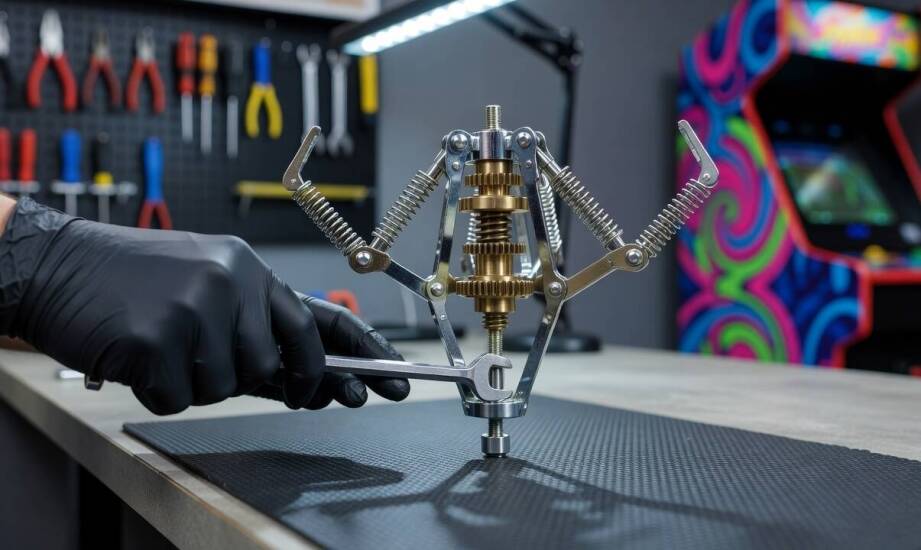
In a family entertainment centre that serves hundreds of players every day, each machine performs thousands of lifting and lowering cycles. The reliability of the entire mechanism depends on seemingly minor details, manufacturing precision, and quick access to service support. Long-term operation under demanding conditions requires appropriate metal alloys and protective coatings, as standard components can deteriorate rapidly under constant dynamic loads. Even the most advanced control electronics cannot compensate for a weak frame or overly soft gears. Understanding how individual systems wear over time helps operators plan maintenance more effectively and avoid unexpected downtime. For operators of large Family Entertainment Centres (FECs), equipment reliability is essential for business stability and a positive visitor experience.
Read more: Aluminium entrance mats – how do you customise them?
Mechanical Wear and the Importance of Material Selection
In prize redemption machines, the components most exposed to wear include drive motors, gear systems, roller guides, and return springs. Continuous operation gradually reduces claw positioning accuracy, particularly when even minimal play develops within the drive transmission system.
Read more: What are the challenges in producing printed ashtrays?
Gears produced from lower-quality polymer materials may show signs of wear after only a few months of intensive use. This can lead to noticeable vibrations and less precise positioning over the selected prize. The electromagnetic system responsible for closing the claw gradually loses efficiency due to coil heating and the natural fatigue of spring components. Mechanical limit switches that define safe travel boundaries may also lose calibration over time because of dust accumulation.
Properly selected steel thickness within the frame helps minimise deformation caused by sudden motor stops. Working components manufactured from stainless steel or hardened aluminium alloys maintain their shape despite repeated exposure to significant forces. Frames built from excessively thin sheet metal may bend permanently, affecting alignment and causing roller assemblies to bind.
The claw mechanism itself is typically manufactured from durable metal, while its gripping surfaces are often protected by flexible silicone coatings. Silicone surfaces can significantly improve grip friction, although they naturally wear down over time. Because the metal core remains structurally durable for much longer, operators can often replace only the worn protective covers. Ignoring minor bends within the main joint can create additional stress concentrations that may eventually lead to cracks around connection points.
How Drive Systems and Power Supply Affect Precision
Modern claw machines commonly rely on digital stepper motors that provide highly accurate positioning above the playfield. This technology often reduces the need for traditional feedback encoders, simplifying electrical system architecture. The absence of conventional carbon brushes removes one of the most common sources of motor failure seen in older DC-based solutions.
Advanced controllers continuously regulate voltage delivery and pulse frequency sent to motor coils. This helps maintain consistent travel speed and torque regardless of prize weight. Properly configured acceleration and deceleration profiles minimise sudden movements that could cause a prize to slip prematurely from the claw.
Stable electrical parameters are equally important for the motherboard and peripheral devices connected to it. Low supply voltage may cause step losses, directly affecting positioning accuracy. Excessively high current can increase the risk of insulation damage within tightly wound motor coils.
Many modern amusement machines also integrate ticket redemption systems that communicate with the machine controller in real time. Consistent power quality allows software to accurately track gameplay cycles and transmit award signals without delays, supporting loyalty programmes and reducing the risk of accounting errors.
Fault Detection and the Benefits of Modular Design
In busy tourist destinations and entertainment venues, a single machine may complete hundreds of operating cycles daily, quickly exposing weak points in its design. Experienced technicians can often identify signs of wear long before a complete mechanical failure occurs.
Common warning signs include increased guide rail noise during horizontal movement and slower return speeds when the claw head travels back to the drop position. A noticeable reduction in claw closing force may indicate progressive deterioration of the electromagnetic gripping system, making early diagnostics essential.
Overheating drive motors may produce the smell of heated insulation before electronic protection systems intervene. Worn side guides can also reduce positional accuracy and responsiveness.
During peak operating hours, thoughtful internal machine architecture becomes particularly valuable. Standardised electrical connectors simplify replacement of damaged sections and can significantly reduce repair times. A modular design minimises downtime and enables rapid restoration of service without moving the entire machine to a workshop.
Preventive Maintenance in Entertainment Centres
Strict adherence to maintenance schedules remains one of the most effective ways to reduce repair costs and maximise equipment availability. Regular removal of contaminated grease from guides and gears helps protect metal surfaces from abrasive dust.
Using dedicated PTFE-based or silicone lubricants can significantly reduce operating noise and improve movement smoothness. Routine inspection of timing belt tension and shock-absorbing components helps prevent skipping, vibration, and unexpected positioning errors.
Cleaning optical position sensors and checking cable integrity within moving cable chains reduces the likelihood of unexpected interruptions during gameplay.
Data gathered from large machine fleets consistently shows that preventive maintenance programmes improve operational readiness and reduce unplanned expenses. Modern machine designers increasingly focus on creating accessible electronics layouts and easier access to adjustment points without requiring complete cabinet disassembly.
Among the companies involved in the design, manufacture, and servicing of amusement equipment and ticket redemption technologies is Magic Play, which has operated within the amusement industry for many years. Operators who provide basic technical training to their staff often reduce dependence on external repair teams. Maintaining cleanliness and proper lubrication also lowers mechanical resistance, helping protect expensive components against premature wear.
Conclusion
The durability of highly stressed components in prize redemption equipment depends largely on the quality of materials used and the precision of the drive system. High-fatigue-resistant materials slow the development of mechanical play and help protect structural elements from premature failure.
However, even the most technologically advanced machine requires a maintenance programme adapted to the operating schedule of a specific venue. Professional cleaning, regular lubrication, and early technical intervention help protect profitability while ensuring safe and reliable operation for players.
The durability of a claw mechanism depends on structural details, not only on control electronics.
Motors, gear systems, guides, and springs operating continuously experience the fastest wear.
Frame, arm, and claw materials directly affect deformation, looseness, and cracking resistance.
Stable power delivery and precise control systems maintain repeatable movement and positioning accuracy.
Early warning signs include guide rail noise, reduced gripping strength, motor overheating, and positioning errors.
Regular inspections, lubrication, and adjustment of mechanical play help reduce downtime and replacement costs.
Simple, modular machine designs are easier to maintain in high-traffic entertainment facilities.
FAQ
Which parts of a claw machine wear out the fastest?
Drive motors, gear assemblies, roller guides, and return springs are typically the first components to show wear. Intensive operation can also create looseness within the drive system and gradually wear gripping surfaces. Over time, this may reduce accuracy and increase the likelihood of breakdowns.
How can an operator tell when a claw mechanism needs servicing?
Common warning signs include noisier guide rails, slower arm return movement, and reduced gripping force. Motor overheating, excessive vibration, and positioning inaccuracies should also be investigated promptly, as they often indicate developing mechanical or electrical issues.
Why are regular lubrication and adjustments so important?
Regular lubrication reduces friction and limits wear on guides and gears. Adjusting mechanical play helps prevent impacts, slipping, and positioning errors. As a result, machines operate more consistently and require fewer repairs or component replacements.
You might be interested

Aluminium entrance mats – how do you customise them?
Aluminium entrance mats combine aesthetics and functionality to influence the first impression of visitors. Thanks to the variety of products available and the customisation options, they can be tailored to individual customer needs. It is noteworthy for its use both indoors and outdoors, making it

Religious vestments in various congregations – an overview and comparison
Religious vestments have for centuries been a sign of belonging to a specific community and an expression of adopted spirituality. Their appearance, color, and way of being worn result from the traditions of a given congregation, the religious rule, and the history of the community. Although many ha